Engine-derived ROI benchmarks for Pigeon Forge-area short-term rentals, single-family rentals, and small commercial properties. Numbers come from running real fixtures through the Cost Seg Smart engine, same engine that produces your actual study. Studies from $495.
Operated by Cost Seg Smart. Studies are IRS-aligned with engineer review included. 5 fixture benchmarks computed May 2026.
Numbers above are engine-estimated outputs from running 5 representative fixtures, not promises about what your specific property will produce. Results vary based on actual property condition, year built, renovation history, county assessor data quality, and rental treatment (STR vs LTR). Full per-fixture table, neighborhood breakdown, and downloadable CSV/PDF on the Pigeon Forge cost seg benchmarks page.
Pigeon Forge sits in the same Sevier County structure as Gatlinburg, same Tennessee no-state-income-tax position, same federal-only cost-seg math, same Smokies cabin market profile. But the buyer-and-demand picture differs in three meaningful ways that affect cost-seg strategy.
First, the demand driver is Dollywood and family-friendly entertainment, not Smoky Mountain National Park access. This shifts the property archetype toward family-vacation-home configurations, sleeps-12+ layouts with game rooms, bunk-bed rooms, and family-friendly FF&E packages. Engine reclassification ratios run nearly identical to Gatlinburg (22–28%) because the property cohort is structurally similar, but the underwriting around operating economics differs (family-vacation occupancy patterns vs couples-getaway patterns produce different ADR-and-occupancy outcomes).
Second, the buyer profile skews second-property-portfolio-oriented. Many Pigeon Forge buyers are existing Gatlinburg owners adding a second cabin in the adjacent corridor, for portfolio scaling, for inventory diversification, or for capturing the different family-tourism demand profile. This makes the cost-seg conversation more sophisticated than typical first-time-STR markets like Asheville or Broken Bow.
Third, the entry price point runs slightly lower than Gatlinburg in equivalent property profiles. Pigeon Forge corridor proximity to Dollywood doesn't quite match Gatlinburg's national-park proximity for STR ADR, but the lower entry pricing supports better per-dollar-of-purchase cost-seg ROI for portfolio operators stacking acquisitions. Tennessee's zero state income tax means the federal §168(k) deduction is the entire tax-savings calculation, with no state-side timing friction.
Verify with your CPA. State tax conformity rules for federal §168(k) bonus depreciation are adjusted frequently, multiple states have modified their treatment two or more times in the past decade. The general framing on this page reflects our understanding as of May 2026, but you should always verify current-year treatment with a qualified CPA or tax attorney before relying on specific dollar projections for your situation.
These aren't rough estimates. Each fixture was run through the same engine that produces your actual study, RSMeans 2024 base costs, BLS PPI time index, county assessor land allocation, IRS Pub. 946 / Rev. Proc. 87-56 MACRS classification, 100% bonus depreciation per OBBBA.
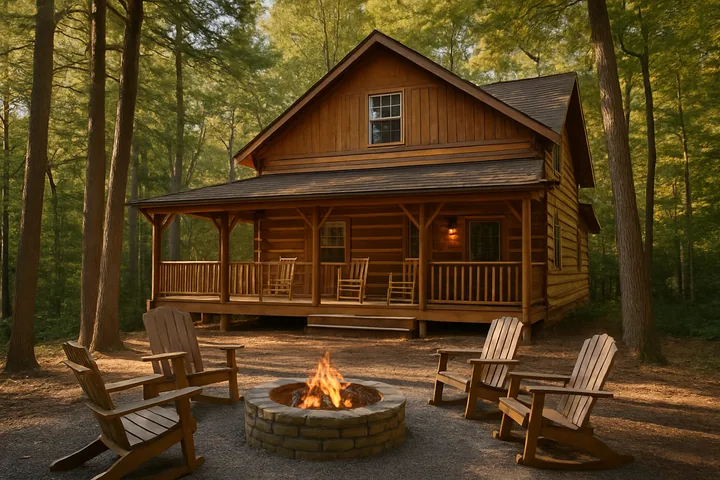
| Purchase price | $565,000 |
| Depreciable basis | $457,198 |
| Land allocation | 19.1% |
| 5-year reclassified | $86,369 |
| 15-year reclassified | $28,908 |
| Total reclass | 25.7% |
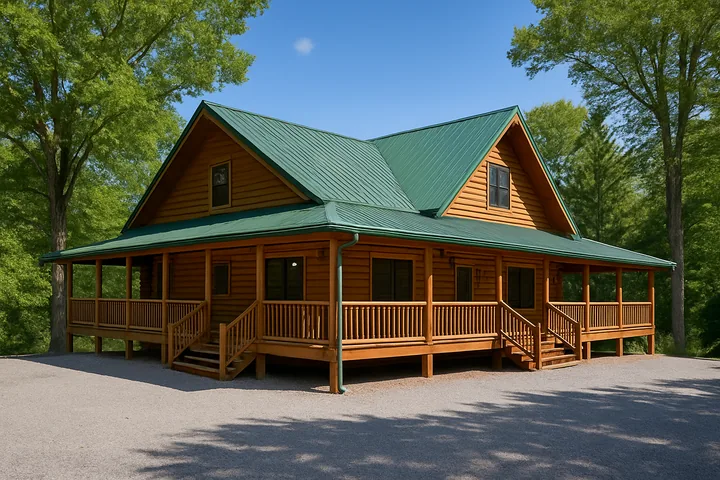
| Purchase price | $595,000 |
| Depreciable basis | $483,735 |
| Land allocation | 18.7% |
| 5-year reclassified | $99,581 |
| 15-year reclassified | $28,888 |
| Total reclass | 27.1% |
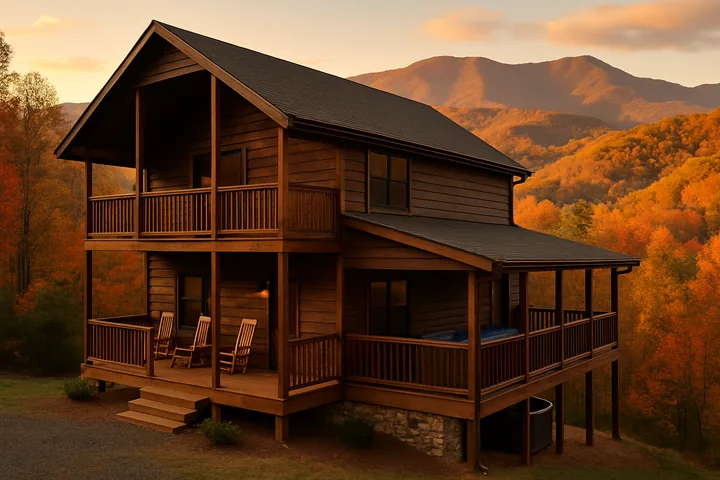
| Purchase price | $585,000 |
| Depreciable basis | $460,336 |
| Land allocation | 21.3% |
| 5-year reclassified | $91,274 |
| 15-year reclassified | $27,902 |
| Total reclass | 26.5% |
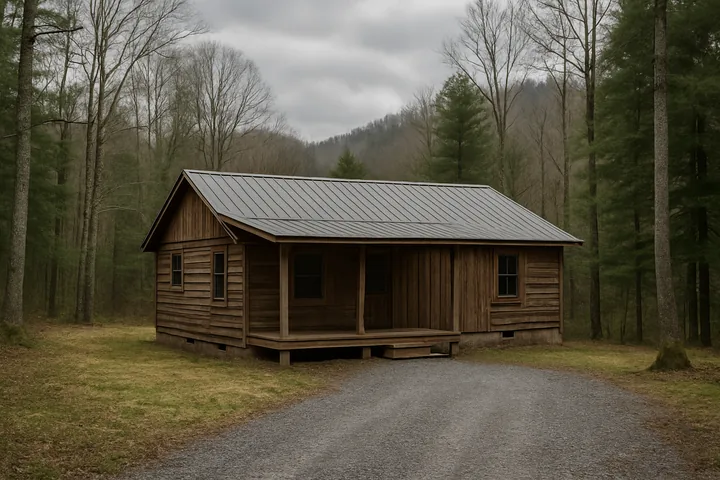
| Purchase price | $425,000 |
| Depreciable basis | $338,810 |
| Land allocation | 20.3% |
| 5-year reclassified | $65,261 |
| 15-year reclassified | $21,951 |
| Total reclass | 26.3% |
| Purchase price | $385,000 |
| Depreciable basis | $303,303 |
| Land allocation | 21.2% |
| 5-year reclassified | $29,631 |
| 15-year reclassified | $20,319 |
| Total reclass | 16.5% |
Cost-seg ROI varies more by neighborhood than by city. Pigeon Forge's 5 sub-markets each have their own land-allocation pattern and property archetype:
| Neighborhood | Typical value | Typical land allocation | Profile note |
|---|---|---|---|
| Dollywood corridor (Pigeon Forge Pkwy) | $565,000 | ~22% | Heart of the Pigeon Forge tourism corridor along US-441. Cabin and resort-home stock close to Dollywood traffic. Mid-tier land allocation. Strong family-vacation demand. |
| Wears Valley (shared with Gatlinburg) | $595,000 | ~22% | Shared corridor between Pigeon Forge and Gatlinburg along Highway 321. Newer cabin development. Lower-than-mountain-resort land allocation. Active STR market. |
| Glades Road / arts area | $585,000 | ~24% | Arts-community-anchored sub-market east of Pigeon Forge proper. Mix of cabin and family-home STR. Slightly higher land allocation than core corridor. |
| Sevierville (Pigeon Forge gateway) | $425,000 | ~20% | Sevierville town just north of Pigeon Forge, Dollywood and Tanger Outlets traffic gateway. Lower entry pricing, lower land allocation. Strong STR rental cadence. |
| Bluff Mountain / Boyds Creek (rural) | $385,000 | ~16% | Rural sub-markets north and east of Pigeon Forge proper. Lower-cost SFR and cabin product. Lowest land allocation. Mix of LTR and emerging STR. |
Methodology note: "Typical land allocation" reflects baseline patterns for the sub-market. For ultra-premium or resort-tier inventory where reconstruction cost exceeds 2.0× the implied depreciable basis after subtracting baseline land, the engine applies a premium land floor (~50%) to keep the study within audit-defensible territory. This means individual fixture engine output may exceed the neighborhood typical, especially for resort-tier ski-in/ski-out, beachfront, or view-premium product where land scarcity dominates value. See the /data/ page for per-fixture land-source attribution. Results vary substantially by specific property condition, renovation history, and assessor records.
Pigeon Forge is jurisdictionally split between City of Pigeon Forge and Sevier County unincorporated areas. Properties within Pigeon Forge city limits are subject to city STR ordinance and city business license requirements. Properties in unincorporated Sevier County (Wears Valley, Bluff Mountain, parts of the Glades Road corridor) operate under lighter county-level lodging-tax registration. The Sevier County jurisdiction is shared with Gatlinburg's unincorporated areas, many Wears Valley and Glades Road properties could be marketed as either Pigeon Forge or Gatlinburg STRs depending on geographic positioning. STR-intent buyers should verify the property's specific jurisdiction. Material participation under §469 is achievable for self-managing operators given the relatively modest professional-management ecosystem; many Pigeon Forge cabin owners self-coordinate via Hospitable or OwnerRez and clear the >100-hour test reasonably easily.
For the full IRS-rule reference layer (§168(k), §469 material participation, state conformity), see irsdepreciationrules.com, our open reference site.
Same Sevier County jurisdiction structure, same Tennessee no-state-income-tax position, same federal-only cost-seg math, nearly identical engine output (22–28% reclassification range for furnished cabin STR). The differences are in operating-economics overlay rather than the cost-seg study itself. Demand-driver: Pigeon Forge runs on Dollywood and family-entertainment traffic (family-friendly STR positioning with sleeps-12+ layouts); Gatlinburg runs on Smoky Mountain National Park access (couples and family STR with mountain-resort positioning). Entry pricing: Pigeon Forge typically runs slightly lower than Gatlinburg for equivalent property profiles. Buyer profile: many Pigeon Forge buyers are existing Gatlinburg owners adding portfolio depth. For cost-seg purposes the math is essentially identical; the choice between the two should be made on operating economics and personal market preference.
Because the underlying property cohort is structurally identical. Both markets concentrate on Sevier County furnished cabin STR product, much of it built 2015+, with high FF&E density (sleeps-12+ family-vacation layouts, multiple hot tubs, game rooms, themed décor) and substantial 15-year land improvement work (decks, gravel drives, fire pits, hardscape). The engine treats furnished cabin STR consistently, same RSMeans 2024 base costs, same BLS PPI time index, same STR FF&E uplift, same MACRS classification. Engine reclassification ratios for Sevier County cabin STR run in a tight 22–28% band whether the cabin is marketed as Pigeon Forge, Gatlinburg, Wears Valley, or Sevierville. What differs across these jurisdictions is operating-economics overlay, not engine output.
Wears Valley is structurally shared between the two markets along Highway 321. Properties on the western half (closer to Pigeon Forge / Sevierville direction) typically market and price as Pigeon Forge product; properties on the eastern half (closer to Gatlinburg / national-park direction) typically market and price as Gatlinburg product. The same Wears Valley property could be positioned either way depending on marketing strategy. Cost-seg engine output is identical regardless of marketing positioning, same Sevier County land allocation, same TN no-state-tax math, same cabin-STR FF&E treatment. The choice of marketing positioning affects operating economics (ADR, occupancy, demand-driver match) but not the cost-seg study itself.
Yes, portfolio operators with multiple Sevier County cabin holdings get compounding cost-seg benefits. Each new acquisition supports a fresh study at $495–$1,495, producing typical $30K–$60K Year-1 federal acceleration per property. Real-estate-professional status under §469(c)(7) becomes more achievable as portfolio size grows (the 750+ hour annual test is easier to clear with 3+ properties given the cleaning coordination, booking management, and maintenance hours involved). Tennessee's no-state-tax position means each cabin's federal deduction is the entire tax-savings story. The §1031 exchange option also remains structurally available for portfolio operators eventually rolling proceeds into different markets.
Same Sevier County, same Tennessee no-state-tax position, but different operating economics. Sevierville properties along Veterans Blvd or Highway 411 typically run lower ADR than Pigeon Forge Parkway corridor properties, the Dollywood proximity premium concentrates on the Pigeon Forge Pkwy corridor itself. Lower ADR doesn't change the cost-seg study output but does affect the operating return that pairs with the Year-1 tax savings. Sevierville's entry pricing is also lower ($385K–$485K vs $565K–$725K for Pigeon Forge corridor), which supports better cost-seg ROI per dollar of purchase for portfolio operators.
More general cost-seg questions answered at costsegsmart.com/faq/.
Cost Seg Smart studies are IRS-aligned, engineering-reviewed, and include written audit defense. Pricing is transparent and starts at $495 for residential properties under $300K, full pricing on the main site.